This 12 day Morocco tour from Tangier offers a profound immersion into the kingdom’s diverse heritage. It stretches from the Mediterranean shores to the golden Sahara. You will traverse the entire country. Witness the architectural evolution from northern blue-washed mountain towns to southern red-clay fortresses. This road trip serves as a living history lesson. It showcases the legacy of Roman conquerors, Arab dynasties, and indigenous Berber tribes. Traveling with a private driver ensures a seamless journey through the High Atlas peaks and Atlantic coastal gems. This provides an intimate look at the soul of Morocco.
Trip Highlights – 12 day Morocco tour from Tangier
- Coastal History: Discover the naval heritage of Rabat and the artistic soul of Essaouira.
- Imperial Grandeur: Explore the medieval scholarship of Fes and the royal palaces of Marrakech.
- Sahara Adventure: Experience a sunset camel trek and a luxury night in an Erg Chebbi desert camp.
- Cultural Immersion: Learn about Berber weaving, traditional tanneries, and nomadic lifestyles.
- Architectural Wonders: Visit the UNESCO site of Ait Ben Haddou and the Roman ruins of Volubilis.
- The Blue Pearl: Relax in the photogenic, azure-painted streets of Chefchaouen.
Itinerary – 12 day Morocco tour from Tangier
Day 1: Tangier to Rabat – Coastal Elegance and the Birth of a Nation
Upon your arrival at the Tangier port or airport, your private driver greets you to begin a journey through Morocco’s political and coastal history. You drive south toward Rabat, the current capital, where the Atlantic breeze meets the ancient stones of the Oudaya Kasbah. This city represents the modern face of the kingdom while carefully preserving its Almohad roots. You will see locals wearing the traditional djellaba, a long, hooded robe that protects against the coastal wind and sun, symbolizing the enduring modesty and style of Moroccan society.
In Rabat, you visit the iconic Hassan Tower. A 12th-century masterpiece that stands as a testament to the grand ambitions of Sultan Yaqub al-Mansur. The nearby Mausoleum of Mohammed V showcases the pinnacle of modern Moroccan craftsmanship, featuring intricate zellij tilework and hand-carved cedarwood. As you walk through the blue-and-white alleys of the Kasbah. You witness the peaceful coexistence of Andalusian refugees and native Berbers. This coastal introduction sets the stage for a trip that balances royal history with everyday traditional life.
Day 2: Casablanca to Essaouira – Modern Icons and the Atlantic Breeze
After breakfast, you continue to Casablanca, the industrial heart of Morocco, to visit the magnificent Hassan II Mosque. This architectural marvel sits on a platform over the Atlantic Ocean and features a retractable roof and a laser directed toward Mecca. The mosque represents the pride of Moroccan engineering and religious devotion, utilizing materials gathered from every corner of the kingdom. You will notice the cosmopolitan energy of the city. Where modern western fashion blends seamlessly with the traditional headscarves and robes of the faithful.
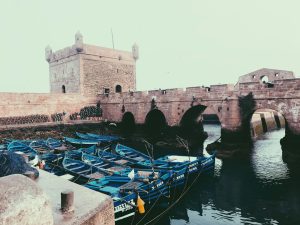
The road trip then follows the scenic coastline toward Essaouira, an 18th-century port town famously known for its artistic community and Gnawa music. The city’s history involves a fascinating mix of Portuguese, French, and Jewish influences, creating a unique cultural melting pot. You will explore the vibrant harbor where fishermen bring in the daily catch using traditional blue wooden boats. The medina of Essaouira, a UNESCO site, offers a relaxed atmosphere where the scent of thuya wood smoke and sea salt fills the air, providing a stark contrast to the busy streets of Casablanca.
Day 3: Essaouira to Agadir – Argan Forests and Berber Traditions
Spend the morning exploring the fortified walls of Essaouira, where brass cannons still point toward the sea to recall the city’s defensive past. You will visit local cooperatives where Berber women extract oil from the Argan tree, a species that grows exclusively in this region. This “liquid gold” plays a vital role in both Moroccan cuisine and beauty rituals. Watching the labor-intensive process of cracking the nuts by hand provides a deep appreciation for the patience and skill of the local women, who often wear brightly colored haiks or wraps typical of rural coastal tribes.
In the afternoon, your driver navigates the rugged coastal road toward Agadir, passing through wild beaches and surfing hotspots. This region serves as the heartland of the Souss-Massa Berber culture, where the language and customs remain fiercely protected. Agadir offers a more modern resort feel following its reconstruction after the 1960 earthquake, but the hilltop ruins of the old Kasbah still whisper stories of the medieval era. You will enjoy a fresh seafood dinner along the promenade, observing the blend of international tourism and local families enjoying the evening “paseo” along the Atlantic.
Day 4: Agadir to Marrakech – From the Ocean to the Red Earth
Start your day with a panoramic view from the Agadir Oufella, where the inscription “God, King, Country” sits proudly on the hillside. You then turn inland, leaving the Atlantic moisture behind as you drive toward the Haouz plains and the legendary “Red City” of Marrakech. The landscape transitions from green argan valleys to the arid, ochre-colored earth that gives Marrakech its distinctive hue. This city has served as a crossroads for caravans coming from the Sahara and the high mountains for over a thousand years.
As you arrive in Marrakech, the energy of the city becomes immediately apparent. You will check into a traditional riad, an inward-facing house that provides a sanctuary from the bustling streets. In the evening, you head to Jemaa el-Fnaa, a massive open-air theater where snake charmers, acrobats, and henna artists gather. This square represents the “intangible heritage of humanity,” where oral storytelling remains a living art form. The smell of grilled meats and the sound of Gnaoua drums create a sensory experience that defines the exotic allure of the Moroccan south.
Day 5: Marrakech Exploration – Palaces, Souks, and Sultanic Legacy
Today, a local guide takes you deep into the history of the Almoravid and Saadian dynasties. You visit the Bahia Palace, where the “brilliance” of Moroccan architecture shines through carved stucco and painted ceilings. The palace tells the story of 19th-century grand viziers and their harem, offering a glimpse into the private lives of the royal court. You will notice the intricate embroidery on the costumes of the palace guards, a tradition that mirrors the complex geometric patterns found in the zellij tilework throughout the city.
The tour continues through the winding souks, organized by trade, from spice merchants to leather workers. You will witness the incredible skill of craftsmen who still use hand tools to shape brass lanterns and weave silk threads. After exploring the historic Saadian Tombs, you visit the Majorelle Garden, a lush botanical park that showcases the vibrant “Majorelle Blue” against tropical palms. This garden reflects the 20th-century influence of European artists who fell in love with Marrakech’s light and color, adding another layer to the city’s rich cultural tapestry.
Day 6: High Atlas Crossing – Ait Ben Haddou – The Gateway to the East
The mountain adventure begins as you ascend the High Atlas Mountains via the legendary Tizi n’Tichka Pass. At an altitude of 2,260 meters, the road offers dizzying views of deep limestone valleys and Berber villages built directly into the cliffs. These mountain communities have maintained a self-sufficient lifestyle for centuries, relying on terraced agriculture and sheep herding. You will see local men wearing heavy wool burnous robes to combat the high-altitude chill, a garment that has changed little since the Middle Ages.
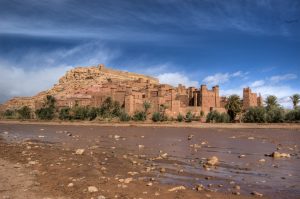
You descend the southern slopes to reach Ait Ben Haddou, a UNESCO World Heritage site and the most famous ksar in Morocco. This fortified village of clay and straw represents the peak of earthen architecture. Designed to stay cool in the summer and warm in the winter. As you walk through the narrow uphill paths, you will recognize the backdrop of numerous Hollywood films. From Kingdom of Heaven to Gladiator. This site was a crucial stop for the ancient Trans-Saharan trade caravans, bringing gold, salt, and spices from Timbuktu to the imperial cities of the north.
Day 7: Dades Valley to the Gorges and the Sahara Dunes
Depart the Dades Valley for the spectacular Todra Gorges, where the river has carved a narrow canyon with walls rising 300 meters high. This natural fortress provides a dramatic landscape for a short hike along the crystal-clear water. You will encounter nomadic Berbers who move their herds through these canyons depending on the season, carrying their lives in woven tents. The cultural history of this region is rooted in the resilience of the Ait Atta tribe, who famously resisted colonial expansion in these rugged mountains.
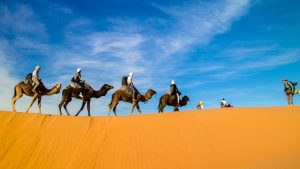
The journey continues toward the edge of the Sahara Desert at Merzouga. As the paved road ends, the massive Erg Chebbi dunes rise like frozen waves of gold on the horizon. You switch your vehicle for a camel, the “ship of the desert,” and trek into the heart of the dunes as the sunset paints the sand in deep purples and reds. You will spend the night in a luxury desert camp. Where Berber hosts share their music and hospitality around a campfire. Under the clearest night sky in the world. You will learn about the celestial navigation techniques that desert travelers have used for generations.
Day 8: Sahara Sunrise – Ziz Valley – The Alpine Middle Atlas
Wake before dawn to witness the transformative power of a Sahara sunrise, a moment of profound silence and beauty. After breakfast in the dunes, you begin the journey north through the Ziz Valley. Home to a vast “sea” of palm trees that provides life to dozens of oasis communities. This valley represents the ancestral home of the current Alaouite dynasty. You will see the ingenious khettara irrigation systems, ancient underground channels that have transported water from the mountains to the desert for over a thousand years.
The road climbs into the Middle Atlas Mountains, stopping in the town of Ifrane, often called “Little Switzerland.” The sloped roofs and tidy gardens reflect the French protectorate’s influence, designed as a “hill station” to escape the summer heat. In the nearby cedar forests of Azrou, you will encounter wild Barbary macaques. This region is also home to the Beni M’Gild tribes, famous for their thick, plush wool carpets designed to provide warmth during the snowy Atlas winters. By evening, you arrive in the medieval majesty of Fes.
Day 9: Fes Medina – The Intellectual and Spiritual Heart
Today, you step back in time as you enter Fes el-Bali, the most complete medieval city in the Arab world. With a local guide, you navigate a labyrinth of 9,000 streets where no cars can pass. You will visit the Al Quaraouiyine University, founded in 859 AD by Fatima al-FihrI. Making it the oldest degree-granting institution in the world. The architectural details of the Bou Inania Madrasa showcase the heights of Merinid artistry. With every inch of wall covered in hand-carved plaster, cedarwood, and geometric tiles.
A highlight of the day is the Chouara Tannery, where you look down upon a sea of colorful stone vats. Artisans still use natural ingredients like pigeon droppings and indigo to soften and dye hides, just as they did a millennium ago. You will see scholars in traditional fassi dress. A refined white djellaba and a red fez hat—reflecting the city’s status as a center of learning. Fes remains the guardian of Moroccan identity, where the calligraphy, culinary arts. And music are preserved with religious devotion, offering an authentic glimpse into the soul of the kingdom.
Day 10: Meknes – Volubilis – The Blue Peak of Chefchaouen
Leave Fes for the imperial city of Meknes, the “Versailles of Morocco,” built by the ambitious Sultan Moulay Ismail. You will stand before the Bab Mansour, a gate of colossal proportions decorated with marble pillars taken from Roman ruins. The city’s history is one of military power and architectural ego. Best seen in the vast royal stables designed to house 12,000 horses. This stop provides a clear look at the 17th-century era of Moroccan history, when the sultan sought to rival the court of Louis XIV in France.
A short drive brings you to Volubilis, the most significant Roman archaeological site in North Africa. You can walk through the Decumanus Maximus and admire the incredibly preserved floor mosaics that depict scenes from Greek and Roman mythology. From these ancient ruins, you head north into the lush Rif Mountains. The landscape changes to green peaks and valleys until the “Blue Pearl” of Chefchaouen appears. The entire medina is painted in shades of azure. A tradition started by Jewish refugees who believed the color symbolized the sky and heaven, creating a surreal and peaceful atmosphere.
Day 11: Chefchaouen – The Blue Pearl of the Rif Mountains
Spend a relaxed day exploring the dreamlike streets of Chefchaouen at your own pace. This mountain town offers a slower rhythm compared to the imperial cities. You can wander the cobblestone alleys, where every corner provides a perfect opportunity for photography. The local Berber women of the Rif wear distinctive striped red-and-white wool skirts called mendl, and wide-brimmed straw hats decorated with colorful pom-poms. This unique costume is a point of pride for the local tribes and reflects the mountain heritage of northern Morocco.
Visit the Ras el-Maa waterfall, where the cold mountain spring water provides a gathering place for locals to wash rugs and socialize. You can hike up to the Spanish Mosque located on a nearby hill for a panoramic view of the blue city nestled in the mountains. This viewpoint is especially magical at sunset when the call to prayer echoes through the valley. The peaceful energy of Chefchaouen, combined with the fresh mountain air, provides the perfect conclusion to your cultural expedition before returning to the coast.
Day 12: Chefchaouen to Tangier – The Completion of the Circle
After a final breakfast of fresh mountain goat cheese and honey. Your driver takes you on the final leg of your journey back to Tangier. You will pass through the city of Tetouan. Known as “The White Dove,” which features a medina with heavy Spanish-Moorish influence. The drive provides a final look at the green valleys of the Rif and the Mediterranean coastline. You have completed a full circle of the kingdom. Witnessing the immense variety of its landscapes and the deep layers of its history.
Depending on your departure schedule. Your driver provides a transfer to the Tangier airport or port for your flight or ferry. You leave Morocco with a heart full of memories and a deeper understanding of a culture that balances ancient tradition with modern life. From the Roman stones of Volubilis to the golden dunes of the Sahara. You have experienced the true essence of Morocco. This 12 days tour concludes our services, leaving you with a lifetime of stories from the “Land of the Setting Sun.”
Included
- Private AC vehicle and professional English-speaking driver.
- 11 nights in premium Riads, boutique hotels, or luxury desert camps.
- Daily breakfasts and traditional dinners in the Sahara and Dades Valley.
- Guided city tours in Fes and Marrakech with local historians.
- Private camel trekking across the Merzouga dunes.
- All road tolls, fuel, and parking fees.
Excluded
- International flights and travel insurance.
- Lunches and personal beverages.
- Entry fees to museums and historical monuments.
- Tips for guides, drivers, and riad staff.
Book This Tour
To book this 12 days ultimate grand circle tour, please contact us by WhatsApp or send us an email. We are available to customize this itinerary to meet your specific travel needs and ensure your Moroccan adventure is unforgettable.